Understanding Fixed vs. Variable Costs
In the bustling economic landscape of Toronto, understanding the distinction between fixed and variable costs is crucial for effective financial management, whether you're a small business owner on Queen Street West or an individual managing personal finances in The Annex. At ExpenseWise, we aim to provide you with the knowledge and tools to navigate your financial landscape with confidence.
What are Fixed Costs?
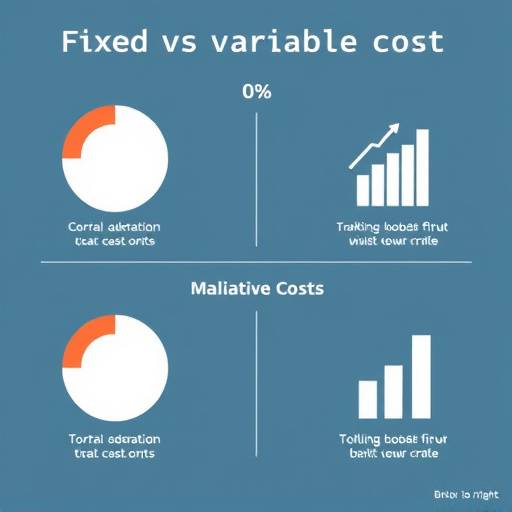
Fixed costs are expenses that remain constant regardless of the level of production or sales volume. These costs are typically incurred regardless of whether a business is operating at full capacity or experiencing a slowdown. They represent a consistent financial obligation that must be met regularly.
Examples of Fixed Costs
- Rent: The monthly rent for your office space on Bay Street, regardless of how many deals you close.
- Salaries: The salaries of your full-time employees, such as the marketing team based in Liberty Village.
- Insurance: The cost of business insurance policies, like property insurance for your retail store in Kensington Market.
- Property Taxes: Annual property taxes on your commercial building in the Financial District.
- Loan Payments: Monthly payments on a business loan used to purchase equipment, like espresso machines for a coffee shop in Little Italy.
- Depreciation: The gradual decline in value of assets, such as delivery vehicles used across the GTA.
- Software Subscriptions: Annual or monthly fees for essential software, such as CRM tools or accounting software for your business in North York.
What are Variable Costs?
Variable costs, on the other hand, fluctuate directly with the level of production or sales volume. These costs increase as production or sales increase and decrease as production or sales decrease. Managing variable costs effectively is essential for profitability and cost control.
Examples of Variable Costs
- Raw Materials: The cost of ingredients for a restaurant in Greektown, which varies depending on the number of meals served.
- Direct Labor: Wages paid to hourly employees who directly contribute to production or sales, such as baristas in a coffee shop near Union Station.
- Packaging: The cost of packaging materials for products sold online, like shipping boxes and labels for a boutique in Yorkville.
- Sales Commissions: Commissions paid to sales representatives based on their sales volume, such as real estate agents working in the Beaches.
- Utilities: Electricity and water bills, which can fluctuate depending on usage at your manufacturing plant in Scarborough.
- Shipping Costs: Expenses related to shipping products to customers, varying with the number of orders fulfilled from your warehouse in Etobicoke.
- Credit Card Fees: Transaction fees charged by credit card processors on each sale, impacting businesses across Toronto.
Fixed vs. Variable Costs: A Comparative Table
| Characteristic | Fixed Costs | Variable Costs |
|---|---|---|
| Definition | Costs that remain constant regardless of production or sales volume. | Costs that fluctuate directly with the level of production or sales volume. |
| Behavior | Do not change in the short term. | Change in proportion to activity. |
| Examples | Rent, salaries, insurance, property taxes. | Raw materials, direct labor, packaging, sales commissions. |
| Control | Difficult to adjust in the short term. | Easier to adjust in the short term. |
| Impact on Profitability | Significant impact on breakeven point. | Direct impact on cost of goods sold. |
Managing Fixed Costs Effectively
Effective management of fixed costs can significantly impact your business's profitability and financial stability. Here are some tips:
- Negotiate Contracts: Always negotiate favorable terms with landlords, insurance providers, and other service providers. Compare rates from multiple vendors to secure the best deals in Toronto's competitive market.
- Optimize Staffing: Regularly assess staffing needs to ensure you're not overstaffed. Consider flexible staffing options to align with fluctuating workloads, especially for businesses in seasonal industries like tourism in Niagara-on-the-Lake (a short drive from Toronto).
- Consolidate Expenses: Look for opportunities to consolidate expenses, such as combining insurance policies or negotiating bundled deals with suppliers.
- Invest in Energy Efficiency: Reduce utility costs by investing in energy-efficient equipment and practices. Rebates and incentives are often available from the City of Toronto and Ontario Power Generation.
- Explore Shared Resources: Consider sharing office space or equipment with other businesses to reduce overhead costs. Coworking spaces are popular in Toronto's downtown core.
Managing Variable Costs Effectively
Managing variable costs requires a different approach, focusing on efficiency and cost control in direct relation to production and sales:
- Optimize Production Processes: Streamline production processes to reduce waste and improve efficiency. Implement lean manufacturing principles to minimize variable costs.
- Negotiate with Suppliers: Negotiate favorable pricing and payment terms with suppliers of raw materials and other variable inputs. Explore bulk purchasing options to lower per-unit costs.
- Improve Inventory Management: Implement effective inventory management practices to minimize waste and spoilage. Consider just-in-time inventory systems to reduce holding costs.
- Control Labor Costs: Implement efficient scheduling practices to minimize labor costs. Track employee productivity to identify areas for improvement.
- Reduce Shipping Costs: Optimize shipping processes to reduce costs. Negotiate discounts with shipping carriers and explore alternative shipping methods.
"Understanding the interplay between fixed and variable costs is paramount for making informed financial decisions. By carefully analyzing these costs, businesses can develop effective strategies to improve profitability and achieve long-term financial success." - Dr. Anya Sharma, Professor of Finance, University of Toronto.
Practical Application: Case Study
Consider "Toronto Treats," a fictional bakery located in the St. Lawrence Market. Their fixed costs include rent ($5,000/month), salaries for two bakers ($8,000/month total), and insurance ($500/month). Their variable costs include ingredients, packaging, and hourly wages for part-time staff.
By carefully monitoring their ingredient costs (variable) and negotiating a slightly lower rent (fixed), Toronto Treats was able to increase their profitability by 15% within a year. This involved sourcing local suppliers for key ingredients and implementing a more energy-efficient oven.
Conclusion
Differentiating between fixed and variable costs is essential for sound financial management. By understanding these cost behaviors and implementing effective management strategies, businesses and individuals in Toronto can optimize their financial performance, improve profitability, and achieve long-term financial success. At ExpenseWise, we're dedicated to empowering you with the insights and tools you need to thrive in Toronto's dynamic economic environment. Contact us today at info@expensewise.ca or call us at 416-555-2020 to learn more about our financial consulting services. Our office is located at 123 University Avenue, Suite 400, Toronto, ON M5J 2H7.